
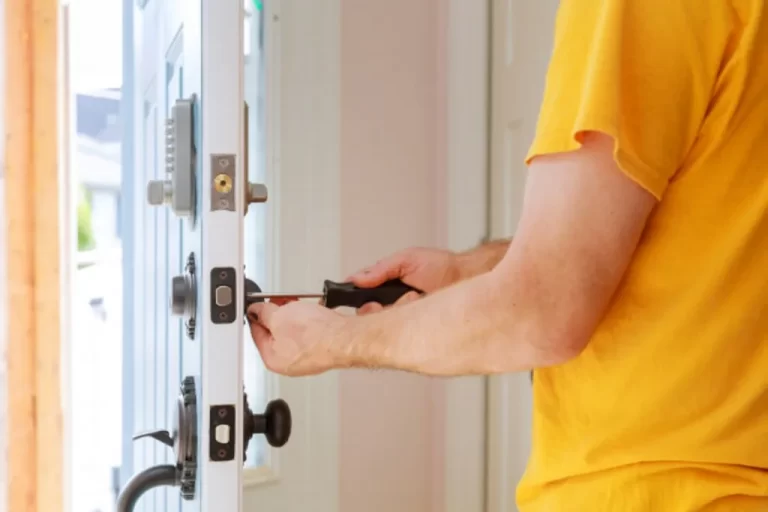
Buying a new home is exciting, but before you unpack every box, take a few minutes to think about who else might have a key. A new home is also a perfect opportunity to review your locks, doors, and hardware and make sure your family is starting with a clean slate. Contact Champion Lock & Safe for professional home security and locksmith services in Oakville and the surrounding area.
Moving into a new home comes with a long list of priorities. There are utilities to arrange, boxes to unpack, furniture to move, and a seemingly endless number of small repairs and improvements to tackle.
Home security should be near the top of that list.
Even if the home appears secure, you may not know how many people have keys to the property. Previous owners may have given copies to family members, neighbours, contractors, cleaners, or friends. You also may not know how old the locks are, whether the doors close and latch properly, or whether the existing hardware provides an appropriate level of protection.
The good news is that improving home security doesn’t necessarily require an expensive renovation.
For many new homeowners, a professional locksmith inspection and security assessment can identify several practical improvements that can make the home safer, more convenient, and easier to manage.
Here are some of the most important things to consider after purchasing a new home in Oakville, Burlington, Mississauga, or the surrounding communities.
- Rekey Your Existing Locks
One of the simplest security upgrades for a new homeowner is rekeying the existing locks.
When you purchase a previously occupied home, you don’t necessarily know who has copies of the existing keys. Even if the seller gives you every key they have, there may be additional copies you don’t know about.
Rekeying allows a locksmith to change the internal configuration of the lock cylinder so the old keys no longer operate the lock.
You can then receive a new set of keys that you control.
This can be a particularly practical option when the existing locks are in good condition and you don’t need to replace the hardware.
Rekeying or replacing?
Rekeying isn’t always the best solution. If the existing locks are damaged, worn out, outdated, or inadequate for your security requirements, replacement may make more sense.
A locksmith can inspect the hardware and help determine whether rekeying or replacing the locks is the better investment.
- Check Every Exterior Door
New homeowners often focus on the front entrance while overlooking other exterior doors.
Your home may have several potential access points, including:
- Front doors
- Back doors
- Side entrances
- Garage-to-house doors
- Basement entrances
- Patio or deck doors
- Secondary entrances
Every exterior door should be checked to make sure it closes properly, latches securely, and has appropriate hardware.
A door with a high-quality lock can still be vulnerable if the door doesn’t close correctly or the locking hardware isn’t properly aligned.
Pay attention to doors that require you to lift, push, or pull them to get the latch to engage. These can indicate alignment, hinge, frame, or hardware problems that should be addressed.
- Inspect Your Deadbolts
Deadbolts provide an important layer of protection on many residential exterior doors.
However, not all deadbolts are equal, and the quality of the installation matters.
A locksmith can assess whether your existing deadbolts are functioning correctly and whether the hardware is appropriate for the door.
It’s also worth checking whether the deadbolt extends properly into the strike and whether the strike and surrounding door frame are in good condition.
If a deadbolt is difficult to operate, don’t simply assume that’s normal. A lock that binds or requires excessive force may indicate an underlying door or hardware problem.
- Upgrade Weak or Damaged Strike Plates
A lock is only one part of the security equation.
The strike plate is the piece of hardware mounted to the door frame that receives the latch or bolt. If the strike or surrounding frame is damaged, loose, or poorly installed, the overall strength of the door assembly can be compromised.
During a home security assessment, it’s worth examining the entire locking area rather than focusing solely on the cylinder.
A locksmith can identify problems with the strike, fasteners, alignment, and condition of the surrounding door frame.
Sometimes a relatively small hardware improvement can make a noticeable difference.
- Don’t Ignore Your Garage Entry Door
The door between your garage and home deserves special attention.
If your garage provides direct access to the interior of your house, it should be treated as an important security point.
Check that:
- The door closes completely
- The latch engages properly
- The lock operates smoothly
- The hinges and hardware are secure
- The door isn’t damaged
- You aren’t relying on a worn or malfunctioning locking mechanism
If you have an attached garage, maintaining the garage door itself is also important. A garage that doesn’t close or secure properly can create another potential access point.
- Consider High-Security Locks
For homeowners looking for an additional level of protection, high-security locks may be worth considering.
High-security lock systems can provide features designed to make unauthorized key duplication and certain forms of manipulation more difficult.
The right system depends on your property, budget, existing hardware, and security goals.
High-security hardware can be especially useful for homeowners who have experienced repeated key-control problems, have valuable assets to protect, or simply want greater control over who can obtain keys.
A locksmith can explain the differences between standard and high-security lock systems and determine whether an upgrade makes sense for your home.
- Establish Better Key Control
Keys are easy to overlook because they are small and familiar.
But from a security perspective, knowing who has a key is extremely important.
Think about everyone who may have received a copy over the years:
- Previous homeowners
- Family members
- Friends
- Neighbours
- Contractors
- Cleaners
- Dog walkers
- Babysitters
- Property managers
- Tenants
You may not need to know exactly who has every old key if you’ve had the locks rekeyed. Once rekeying is complete, you can establish a new key-control system.
Keep track of how many copies you make and who receives them.
Avoid hiding spare keys in obvious locations around the property. Traditional hiding places can be easy for someone familiar with common residential security practices to identify.
- Look at the Condition of Your Doors
Home security isn’t just about locks.
Your doors, frames, hinges, closers, latches, and other hardware all work together.
A door that doesn’t fit correctly into its frame may be difficult to secure. Loose hinges can affect alignment. A worn latch may not engage reliably.
If you’re experiencing problems such as sticking doors, loose hardware, misaligned latches, or doors that won’t stay closed, have the problem investigated.
A professional locksmith can often identify whether the issue is related to the lock, the door, the frame, or another piece of hardware.
- Consider Your Basement and Secondary Entrances
Homeowners sometimes concentrate their security efforts on the front entrance and forget about less frequently used doors.
Basement doors, side entrances, rear doors, and other secondary entrances should receive the same attention.
If you rarely use a particular entrance, don’t assume it doesn’t matter.
In fact, infrequently used doors can sometimes receive less maintenance and may have older or poorly functioning hardware.
Check them periodically to make sure they still operate and secure properly.
- Think About Your Windows and Sliding Doors
A comprehensive home security review should extend beyond traditional hinged doors.
Sliding patio doors and accessible windows should also be checked to make sure their locking mechanisms are functioning properly.
If a window or patio door doesn’t lock correctly, repair or replacement of the locking hardware may be appropriate.
For homeowners making broader security improvements, consider looking at the property as a whole rather than treating each lock as an isolated component.
- Don’t Forget Accessibility
Security and accessibility aren’t mutually exclusive.
In fact, the way a door operates can have a significant impact on how easily family members, visitors, and service providers can enter and exit the home.
Door hardware should be easy to operate without requiring excessive force.
If someone in the household has mobility limitations, an improperly adjusted door closer or difficult-to-operate lock can become a significant everyday inconvenience.
For commercial and public buildings, accessibility requirements can be even more important. For homeowners, however, the same principle applies: a secure door should still be practical to use.
- Create a Security Plan Before Renovating
New homeowners often replace hardware one door at a time as problems arise.
While there’s nothing wrong with that approach, it can sometimes result in a collection of unrelated locks and keys.
If you’re planning multiple upgrades, consider discussing the entire property with a locksmith first.
You may be able to create a more consistent system for your exterior doors.
For example, multiple locks can potentially be keyed alike, allowing one key to operate several appropriate locks. This can make everyday life much easier than carrying a separate key for every entrance.
For larger properties or homes with more complex access requirements, a locksmith can discuss additional key-management options.
- Be Careful About DIY Lock Installation
There is no shortage of residential locks available at hardware stores and online.
Installing a simple lock may appear straightforward, but problems can arise when the hardware isn’t properly matched to the door or existing holes.
Incorrect installation can result in:
- Poor latch engagement
- Difficult operation
- Premature wear
- Misalignment
- Damage to the door
- Reduced security
For homeowners who aren’t comfortable evaluating door hardware, professional installation can provide peace of mind and ensure the hardware is properly fitted and adjusted.
- Make Security Part of Your Move-In Checklist
A simple move-in security checklist can help you avoid overlooking important details.
Before settling into your new home, consider:
Exterior doors
- Do all exterior doors close and latch properly?
- Are the locks operating smoothly?
- Are the deadbolts in good condition?
- Are the strikes secure?
Keys
- Do you know who has the existing keys?
- Have you considered rekeying?
- Are spare keys controlled?
Hardware
- Are any locks damaged or worn?
- Are door hinges and other hardware secure?
- Are secondary entrances properly protected?
Overall security
- Are there outdated locks that should be replaced?
- Would high-security hardware be beneficial?
- Are there doors that require repair or adjustment?
Addressing these questions early can prevent small issues from becoming bigger problems later.
A New Home Is the Perfect Time for a Security Reset
Buying a home represents a fresh start.
It’s an opportunity to repaint, renovate, reorganize, and make the property your own. It’s also an ideal time to establish control over your home’s locks and keys.
You don’t necessarily need to replace every piece of hardware.
Sometimes rekeying is enough. Sometimes a damaged lock needs to be replaced. In other cases, improving the door, strike, or surrounding hardware may provide the biggest benefit.
The right solution depends on the condition of the existing hardware and the security requirements of your home.
Start With a Professional Assessment
If you’re not sure where to begin, you don’t have to figure it out on your own.
Champion Lock & Safe provides residential locksmith and door hardware services in Oakville and surrounding communities. Our locksmiths can inspect your existing locks and door hardware, identify potential problems, and help you prioritize improvements based on your home’s needs.
Whether you’ve just purchased your first home, moved into an older property, or simply want to improve your existing home security, a professional assessment can help you make informed decisions.
Just moved into a new home? Don’t assume the previous keys are the only keys out there. Contact Champion Lock & Safe today to discuss rekeying, lock replacement, and practical home security upgrades in Oakville and the surrounding area.
Your new home should feel like your home from the moment you move in — and that includes knowing who has access to it.