
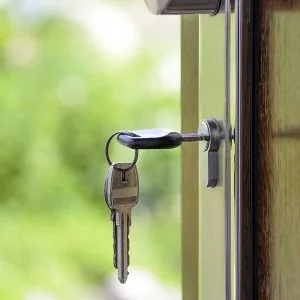
Have you recently moved into a new property, lost a key, or wondered who might still have access to your building? Before you replace every lock, there may be a simpler and more affordable solution. Contact Champion Lock & Safe to find out whether rekeying or replacing your door hardware is the right choice for your property.
When a lock is no longer providing the level of security or convenience you need, many property owners immediately assume the entire lock needs to be replaced. In some situations, replacing the hardware is absolutely the right decision. In others, lock rekeying can accomplish exactly what you need while saving time and money.
Understanding the difference between rekeying and replacing door hardware can help homeowners, landlords, property managers, business owners, and facility managers make a more informed decision about their security.
For properties in Oakville, Burlington, Mississauga, and surrounding communities, Champion Lock & Safe provides professional locksmith services for both residential and commercial customers. Our experienced locksmiths can assess your existing door hardware and recommend a practical solution based on security, condition, compatibility, and your specific needs.
What Does Rekeying a Lock Mean?
Rekeying changes the internal configuration of an existing lock cylinder so that the old key will no longer operate the lock. A locksmith disassembles the cylinder and adjusts or replaces the internal pins so that a new key operates the lock.
The important thing to understand is that rekeying does not normally require replacing the entire lock or door hardware.
For example, imagine that you purchase a home from another owner. The locks may appear to be in excellent condition, but you have no way of knowing how many copies of the existing keys are still in circulation.
Rather than replacing every lock, a locksmith can often rekey the existing cylinders. Your new keys will work, while the previous owner’s keys will no longer provide access.
The same principle can apply to a business.
If an employee leaves the company and you are concerned that they still have a key, rekeying affected locks can eliminate access without necessarily replacing all of the existing hardware.
When Is Rekeying a Good Option?
Rekeying can make sense when the existing door hardware:
- Is still in good mechanical condition
- Provides an appropriate level of security
- Fits the door properly
- Is compatible with your existing key system
- Has not suffered significant physical damage
- Simply needs a new key configuration
It can be particularly useful after a change in occupancy, employee turnover, property purchase, lost keys, or concerns about who has copies of existing keys.
What Does Replacing Door Hardware Involve?
Replacing hardware is a more extensive solution. Instead of modifying the existing lock cylinder, the locksmith removes the existing hardware and installs a new lock, cylinder, lever, knob, deadbolt, exit device, or other appropriate door hardware.
There are many reasons why replacement may be preferable.
Sometimes the existing lock is worn out or damaged. In other cases, the hardware may be outdated, incompatible with the door, difficult to operate, or simply inadequate for the property’s security requirements.
For commercial properties, replacing hardware can also provide an opportunity to address additional issues such as accessibility, durability, fire-rating requirements, or compatibility with a broader master key system.
Rekeying vs. Replacing: What’s the Difference?
The simplest way to think about the difference is this:
Rekeying changes who can operate the lock. Replacing hardware changes the lock itself.
If your existing hardware is in good condition and you are primarily concerned about controlling who has keys, rekeying may be the most practical option.
If the hardware is damaged, worn, outdated, or doesn’t meet the property’s current requirements, replacement may provide a better long-term solution.
A professional locksmith can inspect the hardware before recommending either option.
The Benefits of Rekeying
One of the biggest advantages of rekeying is that you can maintain the existing hardware while changing the keys that operate it.
– Improved Key Control
Keys have a way of getting copied and distributed over time. Former employees may have keys. Contractors may have keys. Tenants may have made copies. Previous homeowners may have given keys to neighbours, friends, or family members.
You may not know exactly who has access.
Rekeying gives you an opportunity to establish a new starting point for key control.
Once the locks have been rekeyed, the old keys no longer operate the cylinders.
– Lower Cost Than Full Replacement
When suitable hardware is already installed, rekeying can be less expensive than replacing every lock.
This can be especially important for larger commercial properties with numerous doors.
Instead of replacing dozens of locks simply because the keyholders have changed, a locksmith can evaluate whether the existing cylinders can be rekeyed.
– Less Disruption
Replacing hardware takes time. Depending on the number and type of doors involved, removing existing hardware and installing new products can create disruption for a business or facility.
Rekeying can often provide a faster way to change access while keeping the existing hardware in place.
– Maintain Existing Hardware
If you already have attractive, durable, or specialized hardware that works well with your doors, there may be no reason to remove it simply because the keys need to change.
Rekeying can preserve the hardware while updating access.
When Should You Replace the Hardware Instead?
Rekeying isn’t always the answer.
If the hardware itself is the problem, changing the key won’t solve it.
– Damaged or Worn Hardware
A lock that sticks, binds, fails to latch properly, or requires excessive force may be showing signs of mechanical failure.
Although some problems can be repaired, severely worn hardware may need replacement.
– Outdated Security
Older locks may not provide the level of security expected for a modern property. If you’re already calling a locksmith because you’re concerned about security, it may be worth evaluating whether the existing hardware is still appropriate.
For certain applications, upgrading to high-security locks or other improved hardware may make more sense than simply rekeying an older cylinder.
– Changing the Function of the Door
Sometimes the reason for replacing hardware has nothing to do with keys.
A business might need an exit device, door closer, automatic door opener, accessible actuator, or another type of commercial door hardware.
In these situations, rekeying the existing lock isn’t going to address the underlying requirement.
– Improving Accessibility
Door hardware can also affect accessibility.
Businesses, offices, public facilities, and other commercial properties may need to consider how easily doors can be opened and operated by people with different mobility needs.
Depending on the application, upgrading hardware or adding an automatic door opener may significantly improve accessibility and usability.
What About a New Home?
Rekeying should be on the radar of anyone purchasing a previously occupied home.
When you receive the keys to your new house, you don’t necessarily know how many copies exist.
The previous homeowner may have given keys to family members. A contractor may have retained one. A neighbour may have a spare. A former tenant may still have a copy.
That doesn’t mean you need to replace every lock.
A locksmith can inspect the existing locks and determine whether they can be rekeyed.
For many homeowners, this provides a straightforward way to establish control over the property’s keys from day one.
It is also an opportunity to identify other potential security improvements, such as upgrading deadbolts, improving strike plates, repairing poorly operating doors, or addressing damaged hardware.
What About Businesses and Commercial Properties?
Rekeying can be particularly useful for commercial properties because employee turnover and changing responsibilities can create ongoing key-management challenges.
Consider an office with several exterior doors, interior offices, storage rooms, and restricted areas.
Over time, different employees may receive keys to different doors. Contractors may need temporary access. Managers may require access to additional areas.
Without a structured key-management strategy, it can become difficult to keep track of who has access to what.
Rekeying can help restore control when circumstances change.
However, for larger or more complex facilities, a master key system may provide a better long-term solution.
A master key system allows different levels of access to be established while maintaining a manageable key structure. Employees can receive keys that open only the doors they need, while authorized managers can have broader access.
Rekeying Can Also Be Part of a Larger Security Upgrade
It’s important not to look at rekeying as an isolated service.
A locksmith assessment can reveal opportunities to improve the overall performance and security of your doors.
For example, while examining a lock, a locksmith may discover:
- A loose or damaged strike
- A door that isn’t closing properly
- Worn hinges
- A failing door closer
- A damaged latch
- Inadequate weatherstripping
- Poorly fitting hardware
- An outdated lock cylinder
- Hardware that isn’t appropriate for the door or application
Addressing these issues can improve both security and everyday operation.
For commercial properties, properly functioning doors and hardware can also reduce maintenance problems and help prevent small issues from becoming expensive repairs.
Don’t Automatically Replace What Can Be Repaired
One of the biggest advantages of working with an experienced locksmith is getting an informed assessment before purchasing new hardware.
Replacing everything isn’t always necessary.
At the same time, choosing the cheapest repair simply because it costs less today isn’t always the best long-term decision.
The right solution depends on the condition of the existing hardware, the type of property, how the doors are used, the level of security required, and how access needs to be managed.
A professional locksmith should be able to explain the available options and help you understand the advantages and limitations of each.
Rekeying vs. Replacing: A Quick Guide
Choose rekeying when:
- Your existing locks are in good condition
- You’ve moved into a previously occupied property
- Keys have been lost or stolen
- An employee or tenant has left
- You aren’t sure who has copies of your keys
- You want to maintain your existing hardware
- You primarily need to change who has access
Consider replacing hardware when:
- The existing lock is damaged or worn
- The hardware is difficult to operate
- The current lock doesn’t provide adequate security
- You need a different type of door hardware
- You’re upgrading the appearance or functionality of the door
- The hardware isn’t suitable for the application
- You’re developing a new key or master key system
In some cases, the best solution may actually be a combination of both: replacing some hardware while rekeying other existing locks.
Choose a Locksmith Who Looks at the Bigger Picture
Whether you’re a homeowner who just purchased a property or a facility manager responsible for dozens of commercial doors, the goal shouldn’t simply be to install or change a lock.
The goal is to create a door and key system that is secure, reliable, practical, and appropriate for the property.
Champion Lock & Safe works with homeowners, businesses, property managers, contractors, and government clients throughout Oakville and surrounding communities. Our team can assess existing locks and door hardware, explain your options, and recommend a solution that makes sense for your property.
Not sure whether you should rekey or replace your locks? Contact Champion Lock & Safe today. Whether you need a single residential lock rekeyed or are managing the security and door hardware requirements of a commercial facility, our experienced locksmiths can help you determine the right solution.
A lock doesn’t always need to be replaced to make your property more secure. Sometimes, the smartest upgrade is simply changing who has the key.